The Scramble
1884. European powerhouses race to colonialise as much of Africa as possible, transforming a living continent into a technical drawing. Through the General Act of the Berlin Conference, the "Scramble" formalised a process of cartographic violence, where geography was rewritten without care for ethnic, linguistic or ecological boundaries.
Scroll to begin extraction records ↓
The West Coast Maritime Hub
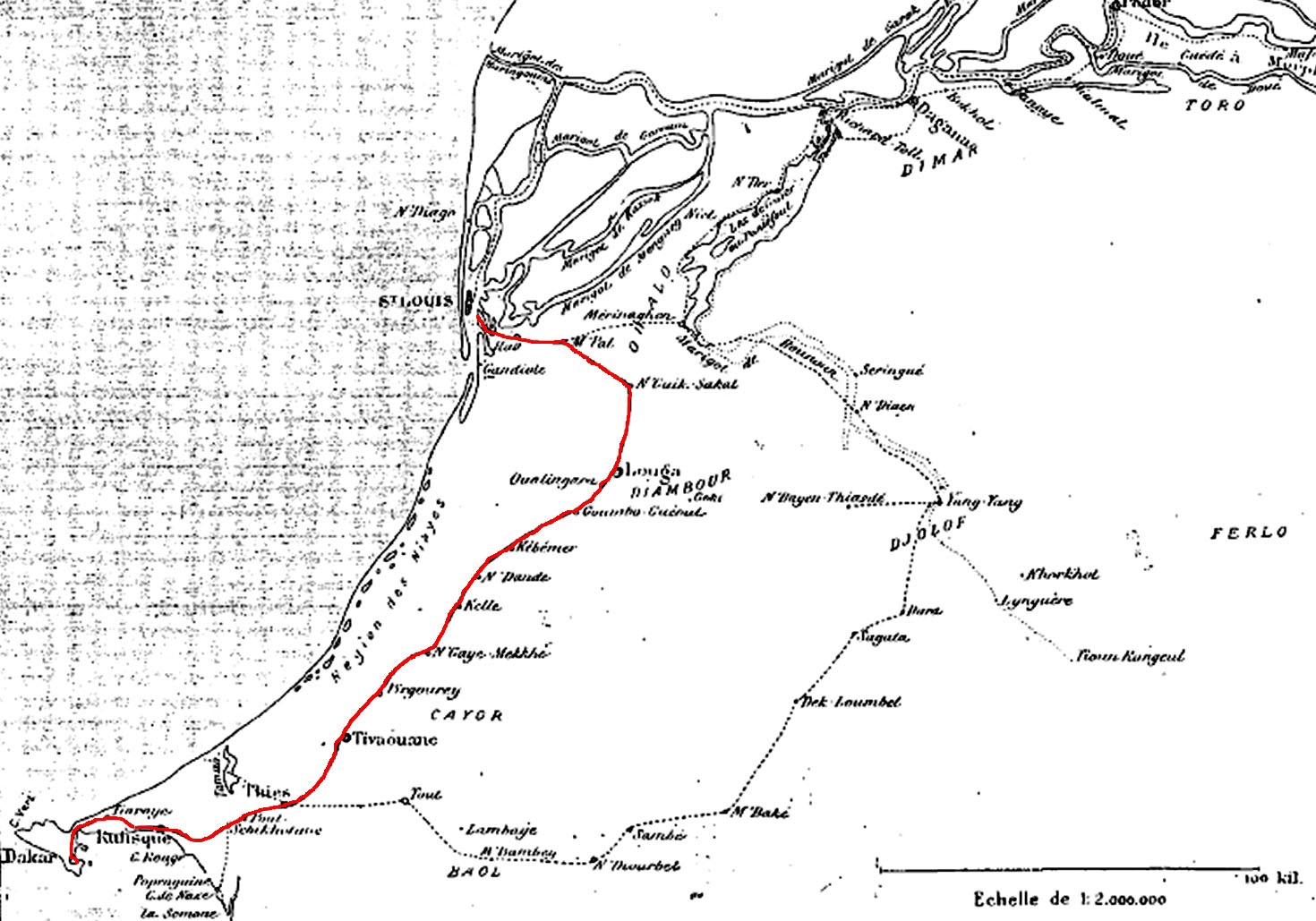
In 1884, Senegal became the 'Administrative Engine' of the French Empire. It became a logistical funnel, rather than just a colony. Through the akar-Saint-Louis railway, the first of its kind, the French turned 'Effective Occupation' into a physical reality, transforming a coastal hub into the nerve center for West African conquest.
Logistical Funnel
The 1885 Dakar-Saint-Louis railway was the region's first major rail line, built specifically to move groundnuts out and military forces in.
Effective Occupation
Effective Occupation: Following the Berlin Conference, France used Senegal as a launchpad to build inland forts, physically securing territory to block British expansion.
The Central Basin
Moving to the Central Basin, we see a completely different side of the Scramble. Rather than a state project, Congo was the private property of one man, King Leopold II. While other countries was built on bureaucracy, Congo was built on the 'Red Rubber' system - a brutal exraction model that sacrificed millions to feed the industrial hunger of Europe.
The Berlin Irony
At the Berlin Conference, Leopold promised to bring "humanitarianism" and free trade to the basin; instead, he created a closed-market system based on forced labor.
"State" of Extraction
Infrastructure here was built purely for output, connecting the deep jungle to the Atlantic, rather than for administrative governance.
The Southern Frontier
As we head to the south to the 'Settler Frontier'. If senegal was about glory and Congo was about rubber, South Africa was about the Mineral Revolution. The discovery of the world's largest gold deposits turned this region into a site of intense imperial conflict, where the 'Cape to Cairo' dream began and the industrial future of the continent was forged in the deep mines of the Rand.
The Mineral Revolution
The discovery of diamonds (1867) and gold (1886) transformed South Africa from a strategic coastal stopover into the most coveted prize of the Scramble.Cape to Cairo Ambition
This region was the starting point for Cecil Rhodes’ vision of a continuous British "red line" of infrastructure spanning the entire length of the continent..jpg)
TIME SHIFT
The ink dries. The parchment is digitized. Colonial outposts evolve into global economic nodes.
Transitioning to the Present Day ↓
Industrial synchrony.
2026. Global tech giants and state powers synchronise their efforts to convert the continent into a planetary battery. Borders of the past are overlaid with high-sped energy corridors, facilitating the frictionless flow of transition minerals.
Scroll to begin extraction records ↓
West African Gateway
Senegal's 'Administrative Engine' evolved into Africa's most strategic Logistics Hub. Here, the 'industrial Acceleration' is written in the steel of deepwater ports and the offshore gas rigs, where Senegal's future is being negotiated in the boardrooms of European energy giants and global shipping conglomerates.
The Energy Frontier
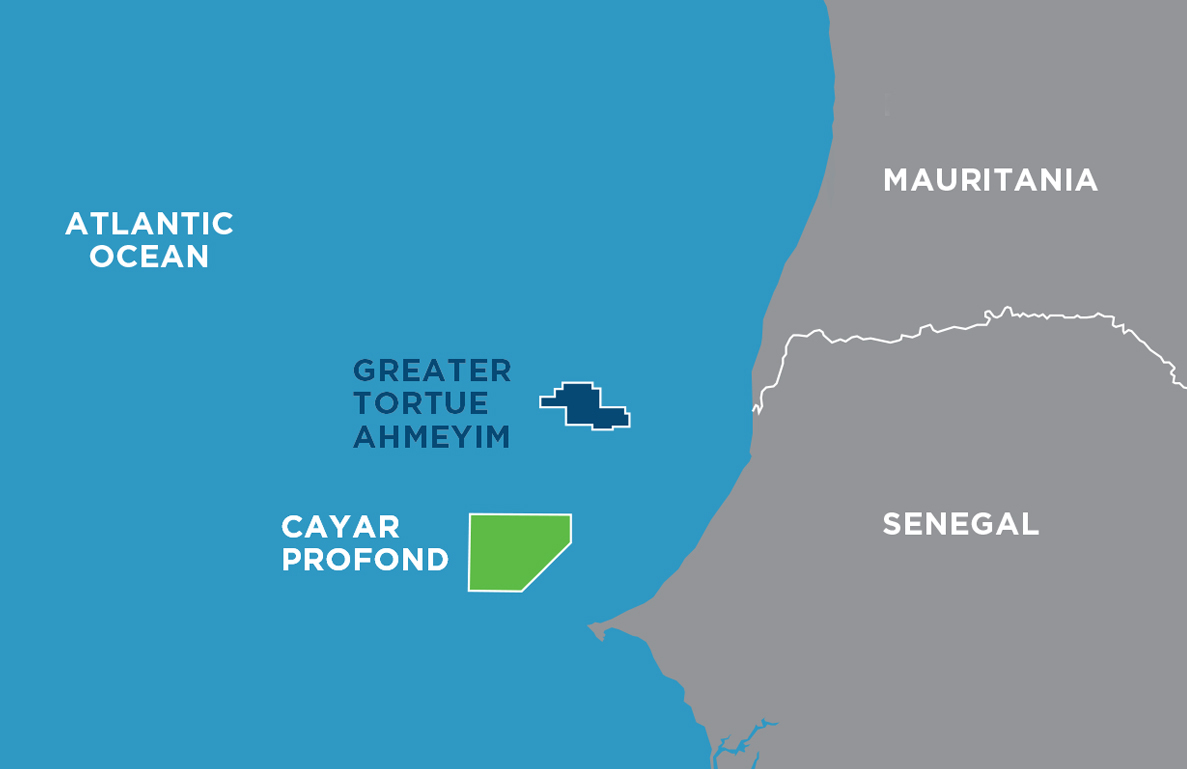
The discovery of the Greater Tortue Ahmeyim (GTA) gas fields has turned Senegal into a global energy player. However, extraction is dominated by foreign entities like BP, fueling European energy grids while local infrastructure remains dependent on external refining.
The Trap
Senegal remains a primary-sector powerhouse, exporting raw Phosphates at global market rates, an implication of unfair trade; country exports raw ingredients cheaply, only to buy back finished products at a premium from the very European markets it supplied.
The Green Heart
Moving from "Rubber Terror" of the 19th century to the "Battery Gold Rush" of the 21st, congo was viewed as a global industrial heartland whose minerals form the nervous system of the world's transition to green energy. Through a network of massive mining concessions, the 'Monolith' of global tech demand has turned the central basin into a vital part of the planet's economy.
Cobalt Monopoly
DRC produces over 70% of the world’s cobalt, a critical component for EV batteries and high-capacity storage, making the region indispensable to the global "Green" transition.
Digital Resource Mapping
Traditional borders are being superseded by "Smart Concessions", blocks of land where infrastructure and security are managed by overseas corporations via automated logistics and satellite surveillance.
Southern Powerhouse
serves as the primary Logistical Monolith for the continent. South Africa provides the processing power and the deep water ports necessary to move minerals into the global market. It is the gatekeeper of the "Southern Frontier" where automatated rail networks and private security corridors ensure the frictionless flow of capital and carbon-neutral energy components.
Home of Platinum
South Africa holds over 80% of the world’s platinum group metals (PGMs), which are critical for the hydrogen fuel cell technology that powers the 2026 green energy grid.
Export Corridors
Expansion of the "Smart Rail" system connects mines directly to the ports of Durban and Cape Town, utilising driverless freight tech to bypass regional instability.
SYSTEM FAILURE
Architectural consequences of Digital Extractivism
DESCENT ↓
Bandwidth Colony
The subsea cables laid for "connectivity" has become the chain of the future. Senegal's role as a logistical hub has been stripped back to a single purpose: Data purification
Humans to AI loop
Modern buildings of Dakar has been retrofitted into a massive RLHF (Reinforcement Learning from Human Feedback) centres where workers on minimum wage train AI
Infrastructure wasteland
Ports are now "dead zones" where no humans are allowed. They are purely mechanical points for the remaining raw materials extracted.
Neural Basin
The "Green Heart" has been pumped dry. Cobalt and copper are gone, leaving behind a landscape of hollow void and massive, heat-generating server farms.
The Cooling
The Congo River, once known for its hydro-electric potential (Inga III) is now purposed almost entirely to cool massive data centres of overseas AI companies
Infrastructure of the Ghost Signal
Smart rail and automatated ports of the past has evolved into a system of Gated Network. Systems that are not managed by humans anymore, but algorithms to ensure efficiency.
Repurposing
Exhausted platinum and gold mines now house massive, subeterranean server clusters. The earth's natural thermal properties are used to cool the hardware and servers.